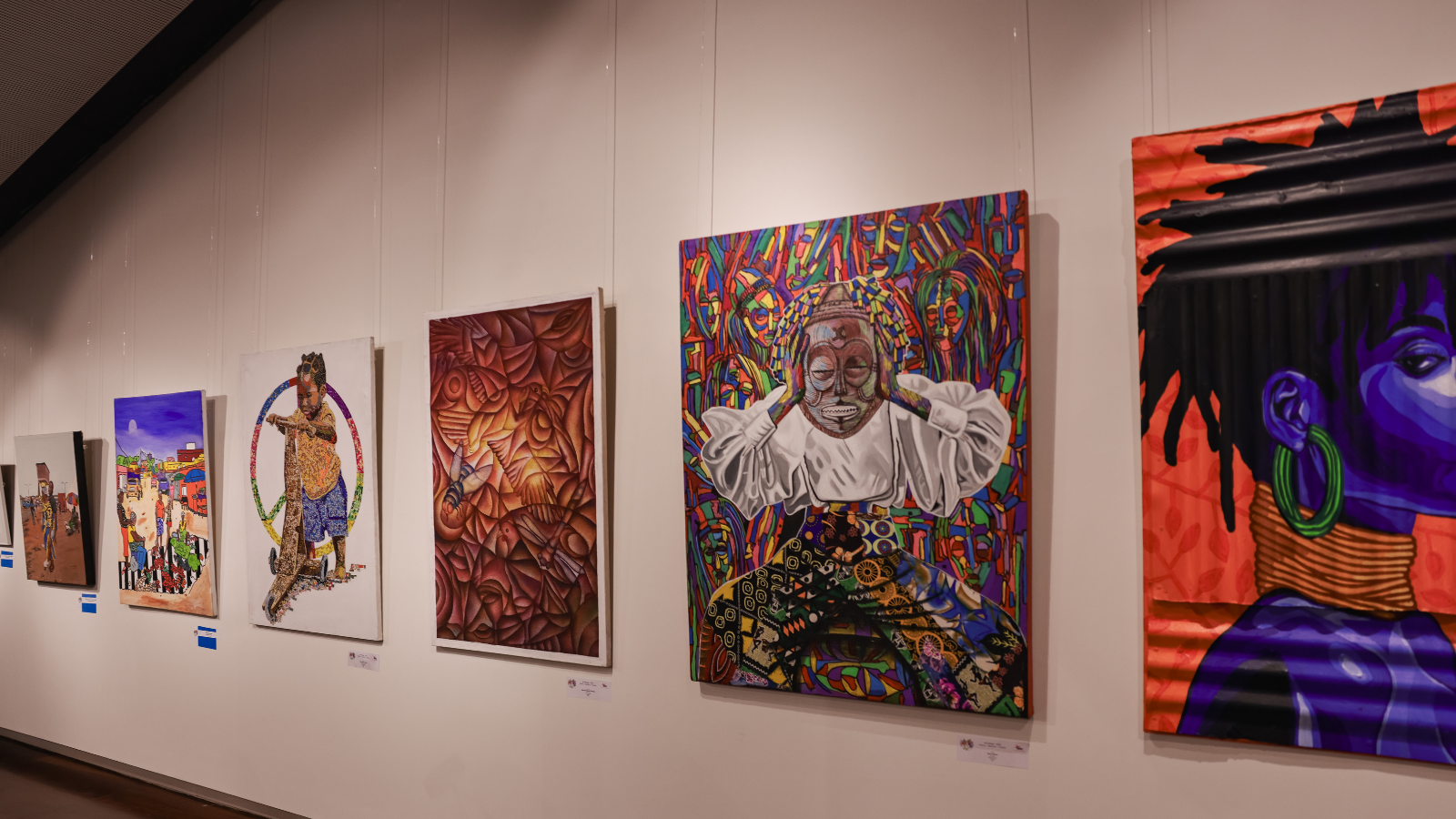
The internet has made the world more connected than ever.
A story created in Bogotá can reach Los Angeles. A filmmaker in Seoul can influence audiences in New York. A designer in Lagos can build a global community without moving to London, Paris or New York.
But global connection creates an interesting challenge:
How do we remain culturally distinct in a world increasingly shaped by the same digital platforms?
The answer may be storytelling.
Culture Is More Than Tradition
Culture is often associated with history, heritage, food, music, language and traditions.
But culture is also constantly evolving.
Artists reinterpret traditions.
Designers combine influences.
Filmmakers create new narratives.
Young generations transform the meaning of identity.
That evolution is what keeps culture alive.
UNESCO’s 2026 work on cultural and creative industries emphasizes the importance of creativity, skills, inclusion and cultural diversity in developing sustainable creative economies. UNESCO
Digital Platforms Changed Who Gets to Tell the Story
For decades, major media organizations controlled many of the channels through which cultural stories reached international audiences.
Today, creators have direct access to global communities.
That does not mean every voice receives equal visibility.
Algorithms still influence what gets discovered.
But the barrier to publishing has dramatically decreased.
A photographer can document a community.
A filmmaker can tell a local story.
A designer can introduce traditional techniques to a global audience.
A writer can preserve memories through digital publishing.
Authenticity Becomes an Asset
As digital content becomes more abundant, authentic cultural perspective becomes increasingly valuable.
Audiences can recognize when a story feels generic.
They respond differently when a creator brings a lived perspective, a distinct environment or a specific cultural reference.
That does not mean culture should be treated as a marketing accessory.
It means cultural identity can be a genuine creative foundation.
The Creative Economy Needs People
Culture is not simply an idea.
It is an economy.
Artists, designers, writers, musicians, filmmakers, photographers, architects and craftspeople all contribute to creative ecosystems.
UNESCO’s 2026 research on skills and employment in cultural and creative industries highlights the importance of developing creative skills and building stronger pathways into creative work. UNESCO
That matters because cultural preservation is not only about protecting the past.
It is also about giving creative people opportunities to build the future.
Storytelling Preserves What Statistics Cannot
A report can tell us that a cultural practice exists.
A story can show us what it feels like.
A photograph can capture a moment.
A film can preserve a voice.
A song can carry memory across generations.
That is why cultural storytelling remains powerful.
In a world increasingly filled with synthetic content and automated production, human cultural perspective may become even more valuable.
The future of culture will not simply be about preserving what came before.
It will be about giving new generations the tools to reinterpret it.