Author: Fame Leader

  • The New Luxury: Why Fashion Is Moving Toward Craftsmanship, Personality and Longevity

    The New Luxury: Why Fashion Is Moving Toward Craftsmanship, Personality and Longevity

    Luxury fashion is entering an interesting moment.

    Consumers are surrounded by more products, more trends and more digital content than ever before. At the same time, the luxury market is facing economic pressure and changing consumer expectations.

    The result is a renewed focus on something fashion has always understood:

    Desirability matters.

    But today’s definition of desirability is becoming more sophisticated.

    From Logo to Meaning

    For years, luxury was often associated with recognizable logos, exclusivity and status.

    Those elements still matter, but modern luxury increasingly depends on storytelling.

    Where was the piece made?

    Who designed it?

    What materials were used?

    How versatile is it?

    Does it feel personal?

    These questions are becoming part of the luxury conversation.

    Recent coverage of Paris Fashion Week has highlighted the industry’s renewed emphasis on craftsmanship and design as brands navigate a softer luxury market. AP News

    Fashion Is Becoming More Personal

    One of the strongest directions in fashion is personalization.

    Consumers increasingly want pieces that feel like their own rather than items that simply reproduce a trend.

    This could mean vintage pieces, tailoring, custom details, unexpected combinations or redesigning something already owned.

    The idea of extending the life of clothing is also gaining attention. Vogue recently highlighted luxury garment redesign as an emerging approach to keeping meaningful pieces in use instead of simply replacing them. Vogue

    That shift is significant.

    Luxury has traditionally been about acquiring something exceptional.

    The next version of luxury may also be about keeping something exceptional.

    The Return of Craft

    In an environment dominated by fast digital imagery, craftsmanship becomes a powerful differentiator.

    A handmade detail cannot be experienced in exactly the same way as a mass-produced object.

    Texture matters.

    Construction matters.

    Fit matters.

    And increasingly, consumers want to understand the story behind what they buy.

    Fashion houses are responding by placing greater emphasis on technical expertise, materials and design identity.

    Climate Is Changing Fashion Too

    Fashion’s traditional seasonal calendar is also being challenged by a changing climate.

    Reuters recently reported that longer, hotter summers are affecting the timing of consumer demand and forcing fashion brands to rethink seasonal collections. Reuters

    That could accelerate the move toward transitional wardrobes.

    Instead of buying exclusively for “summer” or “winter,” consumers may increasingly look for pieces that work across changing conditions.

    What Comes Next?

    The future of luxury fashion may be less about having more and more about choosing better.

    Better materials.

    Better design.

    Better craftsmanship.

    Better personal expression.

    The most compelling fashion brands will not simply tell consumers what is trending.

    They will give them a reason to care.

    Because ultimately, fashion is not just about what we wear.

    It is about how we want to be seen—and how we want to see ourselves.

  • The Modern Approach to Wellness: Why Sleep, Movement and Recovery Matter

    The Modern Approach to Wellness: Why Sleep, Movement and Recovery Matter

    Wellness can sometimes feel complicated.

    There are new diets, supplements, fitness programs, wearable devices and health trends appearing constantly.

    But the foundations of a healthy lifestyle are often much simpler.

    Move regularly.

    Sleep enough.

    Eat thoughtfully.

    Make time for recovery.

    And build habits you can actually maintain.

    Movement Does Not Have to Mean the Gym

    Exercise is often associated with structured workouts, but physical activity includes much more.

    Walking, cycling, dancing, recreational sports, household activities and active transportation can all contribute to an active lifestyle.

    The World Health Organization recommends that adults get at least 150 minutes of moderate-intensity aerobic physical activity per week, or 75 minutes of vigorous activity, with additional benefits from higher levels of activity when appropriate. WHO also recommends muscle-strengthening activities on two or more days each week. World Health Organization

    The important word is consistency.

    A sustainable routine is usually more useful than an extreme program that lasts two weeks.

    Sleep Is Part of the Wellness Equation

    Sleep is often the first thing people sacrifice when life becomes busy.

    But recovery is not wasted time.

    The CDC notes that most adults need at least seven hours of sleep each night and recommends maintaining a consistent sleep schedule as one practical sleep habit. CDC

    That means wellness is not simply about what happens during the day.

    What happens at night matters too.

    Creating a consistent bedtime routine, reducing stimulating activities before sleep and getting enough time in bed can help establish healthier patterns.

    Recovery Is Not Laziness

    Modern culture often celebrates productivity.

    More meetings.

    More workouts.

    More goals.

    More output.

    But recovery allows the body and mind to keep functioning.

    A walk outdoors can be recovery.

    A quiet evening can be recovery.

    A day away from intense training can be recovery.

    Time with family can be recovery.

    The goal is not to eliminate ambition.

    It is to create enough balance to sustain it.

    Build Habits Instead of Chasing Trends

    The wellness industry will continue to introduce new ideas.

    Some will be useful.

    Some will be temporary trends.

    A better strategy is to build a foundation first.

    Start with regular movement.

    Prioritize sleep.

    Eat a varied diet.

    Stay hydrated.

    Manage stress.

    Maintain relationships.

    And speak with qualified healthcare professionals when you have specific health concerns or symptoms.

    Wellness Should Fit Your Life

    The best wellness routine is not necessarily the most expensive or sophisticated one.

    It is the one you can continue.

    For one person, that may mean strength training three times a week.

    For another, daily walking may be the foundation.

    For someone else, improving sleep may be the most important first step.

    There is no single lifestyle that works perfectly for everyone.

    Wellness is personal.

    And sometimes, the most effective approach is also the simplest:

    Move more. Sleep well. Recover intentionally. Repeat consistently.

  • Why Cultural Storytelling Matters More in a Digital World

    Why Cultural Storytelling Matters More in a Digital World

    The internet has made the world more connected than ever.

    A story created in Bogotá can reach Los Angeles. A filmmaker in Seoul can influence audiences in New York. A designer in Lagos can build a global community without moving to London, Paris or New York.

    But global connection creates an interesting challenge:

    How do we remain culturally distinct in a world increasingly shaped by the same digital platforms?

    The answer may be storytelling.

    Culture Is More Than Tradition

    Culture is often associated with history, heritage, food, music, language and traditions.

    But culture is also constantly evolving.

    Artists reinterpret traditions.

    Designers combine influences.

    Filmmakers create new narratives.

    Young generations transform the meaning of identity.

    That evolution is what keeps culture alive.

    UNESCO’s 2026 work on cultural and creative industries emphasizes the importance of creativity, skills, inclusion and cultural diversity in developing sustainable creative economies. UNESCO

    Digital Platforms Changed Who Gets to Tell the Story

    For decades, major media organizations controlled many of the channels through which cultural stories reached international audiences.

    Today, creators have direct access to global communities.

    That does not mean every voice receives equal visibility.

    Algorithms still influence what gets discovered.

    But the barrier to publishing has dramatically decreased.

    A photographer can document a community.

    A filmmaker can tell a local story.

    A designer can introduce traditional techniques to a global audience.

    A writer can preserve memories through digital publishing.

    Authenticity Becomes an Asset

    As digital content becomes more abundant, authentic cultural perspective becomes increasingly valuable.

    Audiences can recognize when a story feels generic.

    They respond differently when a creator brings a lived perspective, a distinct environment or a specific cultural reference.

    That does not mean culture should be treated as a marketing accessory.

    It means cultural identity can be a genuine creative foundation.

    The Creative Economy Needs People

    Culture is not simply an idea.

    It is an economy.

    Artists, designers, writers, musicians, filmmakers, photographers, architects and craftspeople all contribute to creative ecosystems.

    UNESCO’s 2026 research on skills and employment in cultural and creative industries highlights the importance of developing creative skills and building stronger pathways into creative work. UNESCO

    That matters because cultural preservation is not only about protecting the past.

    It is also about giving creative people opportunities to build the future.

    Storytelling Preserves What Statistics Cannot

    A report can tell us that a cultural practice exists.

    A story can show us what it feels like.

    A photograph can capture a moment.

    A film can preserve a voice.

    A song can carry memory across generations.

    That is why cultural storytelling remains powerful.

    In a world increasingly filled with synthetic content and automated production, human cultural perspective may become even more valuable.

    The future of culture will not simply be about preserving what came before.

    It will be about giving new generations the tools to reinterpret it.

  • How to Build a Personal Brand People Remember: 7 Practical Steps

    How to Build a Personal Brand People Remember: 7 Practical Steps

    Having a personal brand is no longer reserved for celebrities or influencers.

    Entrepreneurs, executives, artists, consultants, real estate professionals and creators are all building digital identities around their expertise.

    But personal branding is not simply posting frequently.

    It is about becoming recognizable.

    Here are seven practical ways to build a stronger personal brand online.

    1. Know What You Want to Be Known For

    Start with one question:

    What should people think of when they see your name?

    A strong personal brand has a clear association.

    You might be known for luxury real estate, entrepreneurship, wellness, fashion, leadership or creative work.

    The more clearly you define your territory, the easier it becomes to create consistent content.

    2. Create a Strong Digital Home

    Your social media profiles matter, but your personal brand should not exist only on social platforms.

    Create a website or professional profile where people can learn more about you.

    Your digital presence should communicate:

    • Who you are
    • What you do
    • What you know
    • What you have accomplished
    • How people can contact you

    3. Share Expertise, Not Just Promotion

    One of the easiest ways to weaken a personal brand is to make every post an advertisement.

    Instead, teach.

    Explain.

    Comment.

    Analyze.

    Tell stories.

    People should gain something from following you.

    4. Build Search Visibility

    Social media is important, but search engines can create long-term visibility.

    Publish articles using topics connected to your expertise.

    Answer questions your audience is already searching for.

    Use descriptive headlines.

    Create internal links between related articles.

    And make sure your name and professional information appear consistently across reputable websites.

    5. Show the Person Behind the Expertise

    Authority does not have to feel corporate.

    People connect with personalities.

    Share your perspective.

    Show behind-the-scenes moments.

    Talk about lessons learned.

    Explain why you care about your work.

    A personal brand becomes memorable when expertise and personality exist together.

    6. Build Relationships With Other Publications

    Visibility becomes stronger when your name appears beyond your own website.

    Guest articles, expert commentary, interviews, event coverage and editorial features can all help create a broader digital footprint.

    This is especially useful for professionals who want to establish credibility beyond social media.

    7. Be Consistent Long Enough to Become Recognizable

    Personal branding is rarely an overnight process.

    The objective is not to become viral every week.

    The objective is to become familiar.

    When people repeatedly encounter the same name, expertise and point of view across different platforms, recognition begins to develop.

    The Goal Is Recognition

    A strong personal brand does not simply tell people who you are.

    It gives them a reason to remember you.

    Your website, social platforms, articles, media appearances and professional achievements should all reinforce the same central message.

    The goal is simple:

    When someone searches your name, they should find a story that makes sense.

  • The New Luxury Lifestyle Is About Living Better, Not Simply Living Bigger

    The New Luxury Lifestyle Is About Living Better, Not Simply Living Bigger

    Luxury used to be easy to recognize.

    A five-star hotel. A designer wardrobe. A sports car. An exclusive destination.

    Today, luxury is becoming more personal.

    For many people, the ultimate luxury is not another possession. It is having time, energy, privacy, meaningful experiences and the freedom to live according to personal priorities.

    The Rise of Intentional Living

    Modern luxury increasingly revolves around quality rather than quantity.

    That can mean choosing a smaller number of exceptional experiences instead of constantly accumulating things.

    It can mean taking a slower vacation.

    It can mean creating a home that feels peaceful rather than impressive.

    It can mean protecting time away from screens.

    This shift is particularly visible in travel.

    Wellness travel has continued to evolve toward experiences that combine health, relaxation and social connection. Condé Nast Traveler’s 2026 wellness travel coverage highlights everything from sauna gatherings and star-gazing experiences to retreats designed around connection and sensory experiences. Condé Nast Traveler

    Travel Is Becoming More Experiential

    Luxury travelers are increasingly looking for experiences they cannot simply reproduce at home.

    A beautiful hotel matters, but the story of the destination matters too.

    A private tour.

    A local culinary experience.

    A meaningful cultural encounter.

    A landscape that creates genuine silence.

    The value is not only in the price.

    It is in the memory.

    Wellness Without Obsession

    There is also a growing desire to make wellness feel enjoyable rather than restrictive.

    The modern wellness lifestyle does not necessarily mean optimizing every minute of the day.

    It can be as simple as walking more, sleeping well, spending time outdoors, eating thoughtfully and creating space to recover.

    That is an important shift.

    Wellness becomes a lifestyle instead of another performance metric.

    Your Environment Matters

    Luxury is also becoming connected to environment.

    Lighting.

    Music.

    Materials.

    Scent.

    Privacy.

    Natural elements.

    The way a space makes someone feel can influence how they experience their day.

    This is why hospitality, interior design, fashion and wellness increasingly overlap.

    Luxury is no longer confined to a product.

    It is becoming an atmosphere.

    The Personal Definition of Luxury

    Perhaps the most interesting change is that there is no longer one definition of a luxury lifestyle.

    For one person, it may mean traveling internationally.

    For another, it may mean a quiet Sunday morning with no obligations.

    For someone else, it could mean investing in fitness, education, creativity or family time.

    The modern luxury lifestyle is ultimately about intentionality.

    It asks a simple question:

    What makes your life feel richer?

    The answer is different for everyone.

    And perhaps that is exactly what makes today’s definition of luxury so interesting.

  • The New Advantage for Small Businesses: Using AI Without Losing the Human Touch

    The New Advantage for Small Businesses: Using AI Without Losing the Human Touch

    For years, technology was often considered an advantage reserved for companies with large budgets, specialized teams and significant resources.

    That is changing quickly.

    Today, small businesses can access powerful digital tools that were once available primarily to large corporations. Artificial intelligence is one of the biggest examples.

    But there is an important distinction between using AI and using AI strategically.

    AI Adoption Is Accelerating

    The U.S. Chamber of Commerce reported in October 2026 that 66% of small businesses surveyed were using AI, up from 23% in 2023. The same report found that businesses using AI were more likely to report growth in sales, profits and workforce. U.S. Chamber of Commerce

    The numbers suggest that AI is moving beyond experimentation.

    For many entrepreneurs, it is becoming part of everyday business operations.

    Marketing teams can use AI to brainstorm campaigns. Customer service teams can automate repetitive questions. Business owners can analyze information faster. Content teams can accelerate production.

    But efficiency alone is not the goal.

    Growth is.

    Technology Should Solve a Business Problem

    One of the biggest mistakes entrepreneurs can make is adopting technology simply because everyone else is doing it.

    A better question is:

    What problem are we trying to solve?

    If a company spends hours every week answering repetitive customer questions, automation may help.

    If employees spend too much time organizing information, AI may help.

    If marketing teams struggle to produce consistent content, AI may help.

    But if the problem is poor positioning, unclear messaging or a weak customer experience, technology alone will not fix it.

    Strategy still comes first.

    The Human Advantage

    Interestingly, the more businesses automate, the more valuable human judgment may become.

    AI can generate options. People choose the right ones.

    AI can analyze information. Leaders decide what it means.

    AI can help produce content. Brands still need a voice.

    This is particularly important for small businesses because their biggest competitive advantage is often their ability to build personal relationships with customers.

    Automation should create more room for those relationships—not eliminate them.

    Build Systems, Not Just Tools

    Successful businesses will likely be the ones that connect technology to their existing workflows.

    Instead of asking, “Which AI tool should we buy?” entrepreneurs should ask:

    Where does our business lose the most time, money or attention?

    Then technology can be introduced where it creates measurable value.

    Research from the Federal Reserve also shows that small businesses have been applying AI across areas including productivity, marketing, customer service, analytics and written communications. Federal Reserve Bank of San Francisco

    That variety demonstrates something important: there is no single formula.

    Every company needs its own technology strategy.

    The Future of Business Is Human + Digital

    The next generation of successful businesses will not necessarily be the companies using the most technology.

    They will be the companies using technology with the clearest purpose.

    AI can make a small company faster.

    Systems can make it more efficient.

    But vision, trust and relationships are still human.

    The real competitive advantage is knowing how to combine all three.

  • Hollywood Is Changing: Why Human Storytelling Still Matters in the Age of AI

    Hollywood Is Changing: Why Human Storytelling Still Matters in the Age of AI

    Hollywood has never been afraid of technology. From sound and color to computer-generated imagery and streaming, every major technological shift has changed the way stories are created and consumed.

    Now, artificial intelligence is bringing another transformation.

    But the most important question for the entertainment industry may not be what AI can create. It may be what . human storytelling in the age of AI can create.

    The New Era of Entertainment

    Artificial intelligence is already changing entertainment production, from early-stage ideation and storyboarding to editing, visual effects and content development. Deloitte’s 2026 Media and Entertainment Industry Outlook describes generative AI as a technology that is lowering the barriers to content creation while simultaneously increasing the pressure for creators to differentiate themselves. Deloitte

    That distinction matters.

    When more people have access to sophisticated creative tools, technology itself becomes less of a competitive advantage. The story becomes the advantage.

    A beautifully generated image can attract attention. A meaningful character can create an emotional connection.

    That is where human storytelling remains powerful.

    Creators Are Becoming More Important

    The traditional relationship between Hollywood studios and creators is also changing.

    Internet-native creators are increasingly influencing what audiences watch, discuss and share. The Los Angeles Times has reported on Hollywood’s growing interest in acquiring stories and intellectual property that originate online, reflecting a shift in where entertainment ideas are discovered. Los Angeles Times

    This creates an interesting new ecosystem.

    A filmmaker can build an audience before entering a studio system. A writer can develop a community around a story. A creator can turn a personal perspective into a global conversation.

    The gatekeepers are changing.

    AI Can Create. People Give Stories Meaning.

    The rise of AI does not necessarily mean the end of human creativity.

    Instead, it may change where human creativity is most valuable.

    AI can help accelerate production. It can help generate ideas, organize information and reduce repetitive tasks. But audiences still respond to perspective, emotion, identity and authenticity.

    A story becomes memorable because someone has something to say.

    That could be a filmmaker exploring identity, an actor bringing a character to life, a writer describing an experience nobody else could describe in quite the same way, or a creator turning a personal idea into a movement.

    The Future Will Belong to Differentiated Voices

    Entertainment is becoming more accessible, but that does not necessarily mean it is becoming less competitive.

    Quite the opposite.

    When anyone can produce content, audiences have more choices than ever.

    The creators who stand out will be those who develop a recognizable voice.

    The future of entertainment may therefore be less about choosing between humans and machines and more about understanding how technology can amplify human creativity without replacing the reason people create in the first place.

    Hollywood’s next chapter will not simply be about better technology.

    It will be about better stories.

    And those stories will still begin with people.

    YOUR STORY DESERVES TO BE SEEN.

    Have a story, achievement, brand, or perspective you’d like to share with our audience?

    Write to us at hello@fameleader.com

  • Welcome to Fame Leader: Where Success Gets Seen

    Welcome to Fame Leader: Where Success Gets Seen

    Some people chase the spotlight. Others build something worth pointing it at. Fame Leader is an online magazine for rising talent, made for that second group.

    Creative workspace at night with a desk lamp, laptop and notes, city lights outside the window

    We started this magazine in October 2026 with a simple idea. In every industry and every city, people are doing remarkable work that most of us never hear about. A founder who left a steady job to launch a product. A musician releasing a first album without a label. A writer whose debut is finding readers one recommendation at a time. Their stories are good. They just haven’t had the right stage yet.

    That’s what we want to be.

    What you’ll find in Fame Leader

    We look past job titles and follower counts to the person behind them: the decision that changed everything, the setback nobody saw, the moment it finally started to work.

    Here’s what we cover:

    • Entertainment: actors, musicians, authors, influencers and performers building a following
    • Business: founders and small brands growing on their own terms
    • Fashion and Lifestyle: designers, creators and tastemakers
    • Interviews: short video conversations, in their own words
    • Tips & Guides: practical advice on beauty, wellness, style and business

    Why an online magazine for rising talent

    Fame isn’t the only measure of influence. Often, influence shows up in what someone builds, who they bring along and what’s still standing after they move on. Those stories usually come from people who are just getting started. That’s why we built an online magazine for rising talent instead of another celebrity news site.

    For you as a reader, that means hearing about new names before everyone else does. And every now and then, it might mean finding a story that makes you rethink your own plans.

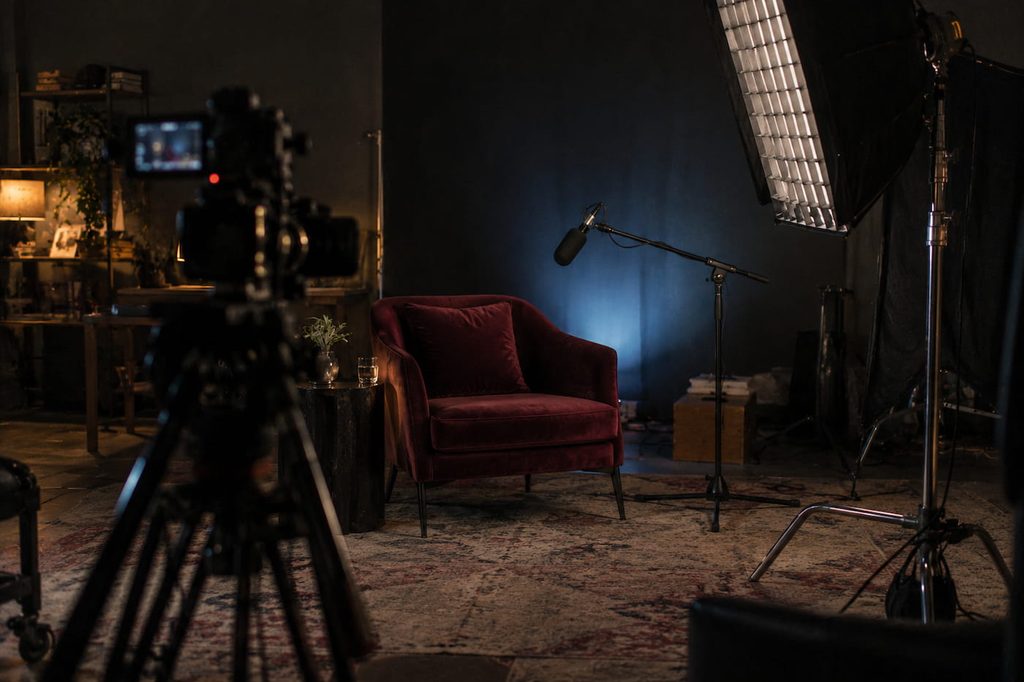
    Interview set with a burgundy armchair, video camera and studio lights

    Have a story we should hear?

    If you’re building something worth talking about, we’d love to know. Tell us about it on our Get Featured page, apply for a video interview, or write to us at hello@fameleader.com.

    There’s always another story behind success. Welcome to Fame Leader.